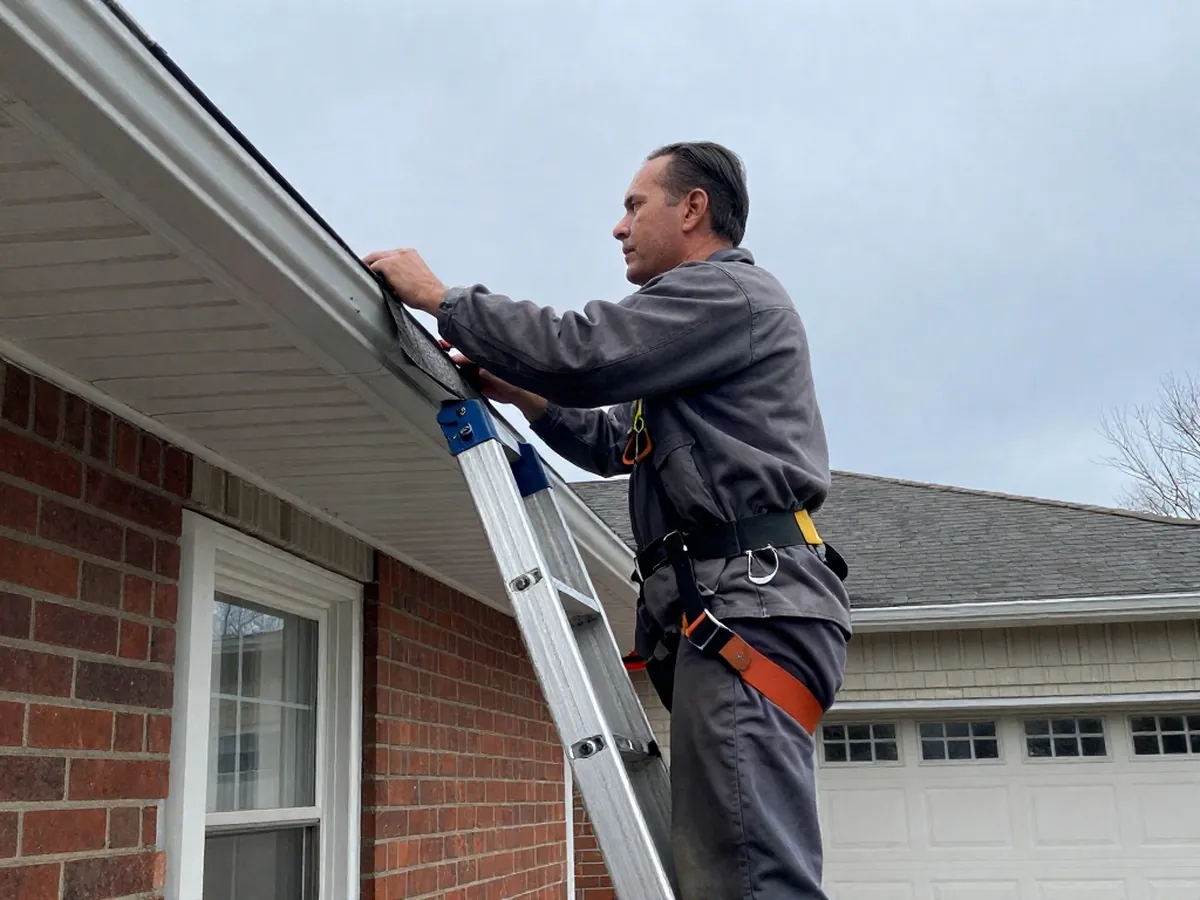
Wires and ladders get settled first
Start with the wires. PSE&G warns that a downed power line is often still energized and can look deceptively harmless. It asks everyone to keep at least 30 feet away and to keep others off too. Reach the utility on 1-800-436-7734, or dial 911.
Then the ladder. New York State's health department lists locking the base, keeping three points of contact and skipping ladders in wet or icy weather. A phone call can be made from the lawn.
What the first call needs
Pull together the address, the room beneath the trouble spot, a ballpark age for the roof and some photos from the lawn. Say when it began and whether it comes back in the same place.
Grand Clark Roofing does no roofing. A local contractor, independent of Grand Clark Roofing, takes the call and decides whether a visit makes sense, and when.
The visit, from the yard to the attic
Trade-group guidance written after Superstorm Sandy begins at ground level, with binoculars, from the yard or an upstairs window. Gutters get cleared of debris next. Then comes the attic, where the underside of the roof deck can be checked. Flashings top its list of weak spots.
A Department of Energy brief repeats a builders' guideline that favors a new roof when over a tenth of the old one would need work. Ask the roofer for the damaged share of your roof.
Reading the paper before signing
Any home improvement priced over $500 requires a written contract, signed, under state rules. It lists the seller and the seller's street address, describes the work and principal materials, gives the total price and states when work starts and ends. A financing security interest and any written promise about the work are recorded too.
Changes after signing get written down and signed as well.
One third, one third, one third
In a 2012 release, the Division of Consumer Affairs offered a rule of thumb. Pay no more than a third before work starts, a third at the halfway point and a third on completion. It is a yardstick, not a ceiling in law.
The release also advised asking to see the contractor's liability insurance policy and phoning the insurer to confirm the policy is valid.
The last signature comes last
Under state rules, a buyer cannot be asked to sign off on completion, or to pay the final bill, before the home improvement is finished under the contract. Where inspections apply, the buyer gets copies of the inspection certificates ahead of that last payment.
If the contract promised anything in writing about the work, ask for a copy at the end.