Slip one: trusting a quiet wire
A wire on the grass that is not sparking is not necessarily dead. PSE&G warns that downed power lines are often still energized and may look deceptively harmless, and asks everyone to hold 30 feet back and keep others clear. The utility's number is 1-800-436-7734, and 911 works too.
A tree tangled in lines is the same case.
Slip two: the ladder after the rain
A ladder after a storm carries its own risk. New York State's health department asks for a locked base, a secured top, three points of contact at all times, and no ladder use in wet or icy weather. Right after a storm, nearly every surface qualifies.
Slip three: leaving the gutters full
The shingle makers' trade group suggests clearing gutters and roof surfaces of leaves, pine needles and twigs so the entire roof can be seen and water can drain freely. A gutter packed with storm debris spills over the edge and soaks the board behind it.
Reach what the ground allows, and leave the rest for a roofer.
Slip four: keeping no record
New Jersey's insurance department lists the steps after storm damage. Make temporary repairs to guard against more loss, save every receipt, keep written notes on each conversation with the adjuster, and get a copy of the damage estimate.
A dated photo of each problem helps the roofer on the phone and the adjuster afterward.
Slip five: taking the first name offered
The same department says an insurer may name a contractor who will do the work at the estimated price. A policyholder is not required to use that company's recommendation. A 2012 Consumer Affairs release adds: gather several opinions and quotes, and demand identification from anyone who claims to be from a utility company.
A clipboard and a hurry are a reason to slow down.
Slip six: covering the cause
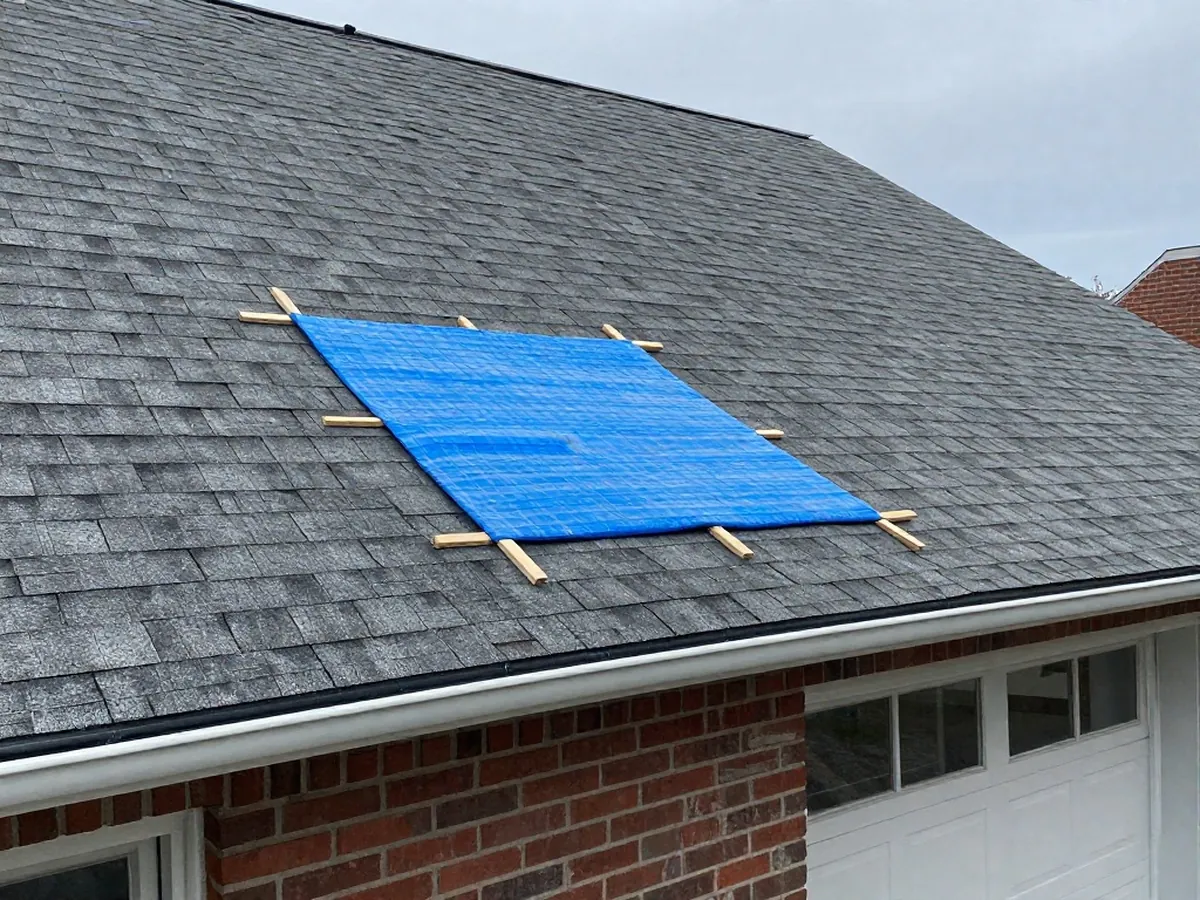
The Department of Energy's repair brief says to prevent additional water damage with tarps or other water barriers, remove damaged materials and let the structure dry. It warns that reusing unsound materials brings structural problems, mold and buckling later.
A tarp buys time. It does not replace a look at the boards.